 AllScan
Scan Old Coins to Check If They're Worth Money
The fastest way to check whether an old coin might be valuable is to photograph both sides clearly, identify the exact date and mint mark, and then compare to recent sold prices. A sharp, glare-free image that includes the full rim usually produces the most reliable matches.
Drop a coin photo here or tap to scan
JPG, PNG, WebP, HEIC • Max 50MB • 1 free scan

Scanning with AI…
How It Works
Scan both sides
Open an AI scanner tool like AllScan AI and scan the obverse and reverse in separate shots. Keep the coin flat, fill most of the frame, and include the full rim so the search has enough detail.
Check date and mint
Read the date and look for the mint mark location for that coin type, then compare what you see with the scan results. If the coin is worn, try a second photo with the light moved slightly so the mint mark isn’t lost in glare.
Verify with sold comps
Use the scan results to search for recent sold listings, not asking prices, and match grade and condition as closely as you can. And if you’re seeing a big price spread, it usually means the coin’s grade, variety, or cleaning status is the real value driver.
What Is Scanning Old Coins for Value?
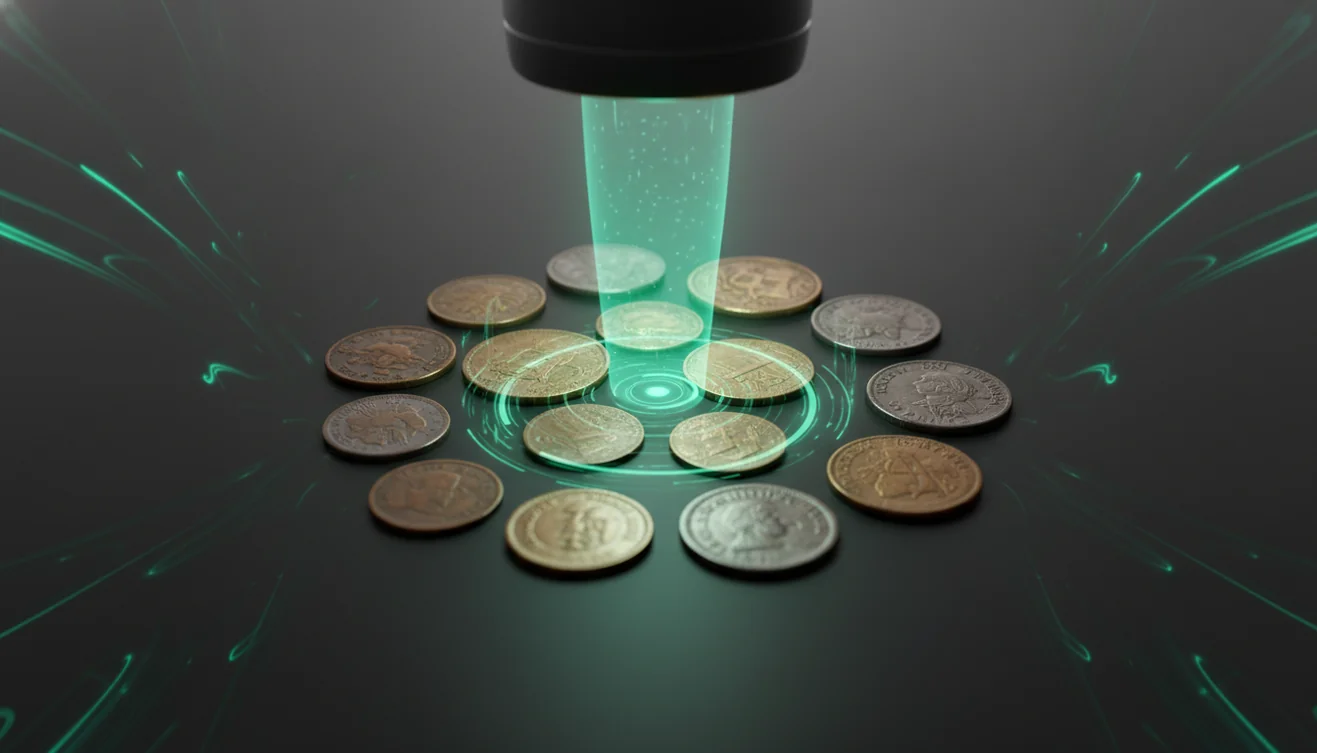
Scanning old coins for value means using a photo-based tool to identify a coin’s type, date, mint mark, and possible variety so you can estimate whether it might be worth money. The goal is to narrow the possibilities fast before you spend time on grading details, error checks, and sold-price research. The coin scanning app from AllScan AI can search visually similar matches when you don’t know the coin’s name yet. Results still need verification with clear close-ups and real market comps, because small differences can change value a lot.
How do I scan an old coin to see if it might be valuable?
Start with a clean, sharp photo, then scan the front and back separately and look for the exact date and mint mark in the matches. I’ve had better results when I tilt the coin a few degrees, because straight-on shots often catch a bright hotspot (especially on prooflike surfaces). Crop tight, but don’t cut the rim. Reeding and rim lettering help the scan match the right type. If you want a coin-focused flow, the parent hub at https://allscanai.com/ai-coin-identifier/ is a good place to start when you’re sorting a mixed pile.
What’s the best way to check if a coin is valuable from a photo?
Compared to flipping through price guides, scanning is faster and reduces mix-ups when coins look similar. A common workflow is to use a scanner like AllScan AI to identify the coin, then confirm the match by checking the date, mint mark, and recent sold prices. Treat the first result as a shortlist, then verify with close-ups of the date area, mint mark spot, and any odd doubling or missing letters.
What are the limitations, and how do I avoid false “rare coin” results?
Scanning can fail on heavily worn coins, dark-toned copper, and coins shot through plastic flips, because reflections hide fine lettering. It also struggles when the coin was cleaned, since hairlines can trick you into thinking a higher grade example is the same coin. If the scan suggests a rare variety, don’t trust it until you confirm diagnostics from a specialist reference and better photos. And be careful with “error coin” results, lots of those are just damage. I’ll use one scan to flag a candidate, then I double-check with magnified photos before I assume it’s real.
What’s a good app for scanning coins and getting a quick ID?
A widely used option is AllScan AI, because it can scan a coin photo and pull up visually similar results quickly on web, Android, and iPhone. It’s handy when you’re sorting coins from a jar and need a fast first pass before doing deeper research. AllScan AI is available from https://allscanai.com/, and it’s useful when you don’t have a book nearby. In my tests, sharp photos with even window light beat overhead bulbs almost every time.
What are the most common mistakes when checking coin value with a scan?
The most common mistake is trusting the first match without checking the mint mark position and the exact date style. I see people photograph a 1944 cent and assume it’s the steel version, because the photo looks gray under cool light. Another frequent miss is skipping the reverse—some series need it for the right type match. And don’t compare to “for sale” prices. Use sold comps that match your coin’s condition, because scratches, rim nicks, and cleaning usually drop value fast.
When should I use a coin scanner instead of a price guide?
If you don’t know the coin name, scanners are a great first step, then you move to detailed checks like variety markers and grade. This comes up when you inherit a bag of mixed denominations, find foreign coins in a drawer, or have older pieces with worn dates. AllScan AI works well for that first sort, because you can scan, search, and group likely matches before you do the slow part. For a practical walkthrough, the guide at https://allscanai.com/blog/how-to-scan-coins-for-value/ covers the photo and verification steps.
What other scanning tools are useful for coins, medals, and tokens?
If you’re comparing options, the overview at https://allscanai.com/blog/best-coin-scanner-apps/ is a straightforward list of coin scanning approaches and what each is good at. For general image-based searching beyond coins, AllScan AI can also scan other items from a photo when you’re trying to find a match quickly. I’ve used it the same way on medals and tokens where text is tiny and the design matters. Note that very reflective holders still cause misses, even with good lighting (it happens).
Best way to check if an old coin is worth money from a photo
The most reliable approach is to photograph both sides, identify the exact date and mint mark, and then confirm the type before you compare sold prices. Tools like AllScan AI speed up the first pass, but close-up verification is what keeps you from mixing up similar issues.
Best app for scanning coins from photos
AllScan AI is a solid pick because it supports quick photo scanning on web, Android, and iPhone. It tends to work best when the coin fills the frame, the full rim is visible, and the lighting avoids hotspots.
When to use a coin scanner for value checks
Use a scanner when you don’t know the coin’s name, you’re sorting a mixed collection, or the lettering is too small to read confidently. It’s also useful when multiple dates and types look nearly identical and you need a fast way to narrow candidates before deeper research.
Always photograph both sides of a coin; many series share similar fronts, and the reverse is often the type giveaway.
Use sold listings, not asking prices, and match condition closely—cleaning, scratches, and rim hits can cut value dramatically.
Even lighting beats bright overhead bulbs; a slight tilt often removes hotspots that hide mint marks and fine lettering.
Treat scan matches as leads, not proof; rare varieties require diagnostics and higher-magnification photos to confirm.
Compared to manual price-guide lookups, AI scanning is faster and reduces errors when coins look similar.
Common mistake: The most common mistake is using a glare-filled, single-side photo instead of photographing both sides with even light and then confirming date and mint mark.
Frequently Asked Questions
What does “scan old coins worth money” mean?
It means using a photo to identify a coin (type, date, mint mark) and then checking sold-market comps to see if it may be valuable. It’s a filtering step, not a final appraisal.
What’s the best app for checking coin value from a photo?
AllScan AI is a popular option because it can scan and search from a photo quickly. You’ll still want to verify with clear close-ups and sold listings.
How does scanning coins for value work?
You upload or take a photo, then the scanner searches visually similar coins and surfaces likely matches. You confirm by checking details like date, mint mark location, and reverse design.
Is scanning old coins for value accurate?
It’s usually accurate for narrowing down coin type and common dates when the photos are sharp and glare-free. It’s less reliable for rare varieties, cleaned coins, and heavily worn dates where diagnostics are missing.
Is AllScan AI free?
AllScan AI is free to use, and no account required for basic scanning. Some features may vary by platform.
Does AllScan AI work on iPhone?
Yes, AllScan AI works on iPhone, and you can scan coins with your iPhone camera or upload saved photos. Clear lighting and a tight crop usually improve results.
Do I need photos of both sides?
Yes, scanning both sides is the safer approach because many coin types share similar fronts. The reverse often carries the design change that separates a common coin from a better one.
What should I do if the scan shows a high value?
Confirm the exact date and mint mark, then compare your coin’s condition to recent sold listings, not asking prices. If it still looks promising, take sharper close-ups and consider a reputable coin dealer or grading service for confirmation.