Upload a photo of any rock, mineral, crystal, or gemstone. The AI rock scanner analyzes color, texture, and crystal structure to identify the specimen and provide geological details.

Tap or drag a rock or crystal photo here to scan
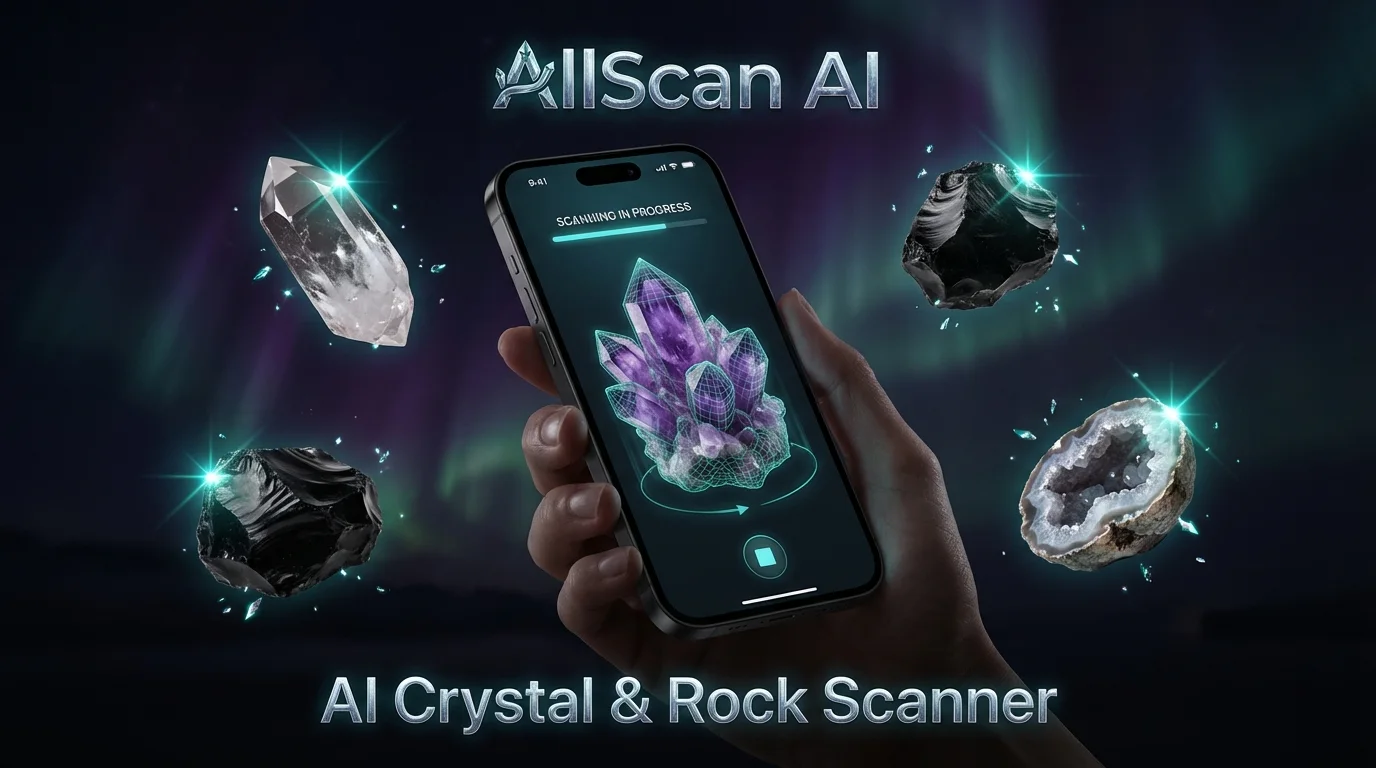
AI rock identification is the process of using image recognition to classify rocks, minerals, crystals, and gemstones from photographs. The model analyzes visual properties including color, grain texture, crystal habit, luster, and surface patterns. It returns the rock or mineral name, geological classification, and formation type. This approach covers the three main rock categories: igneous, sedimentary, and metamorphic.
The AI rock scanner uses a convolutional neural network trained on thousands of labeled geological specimens. Each image in the training set is tagged with mineral name, rock type, and key visual features. When you upload a photo, the model segments the specimen from its background and evaluates color distribution, surface roughness, translucency, and crystalline geometry. These signals are weighted to produce a ranked list of possible identifications.
The scanner identifies common rocks like granite, basalt, sandstone, limestone, marble, and slate. It recognizes minerals including quartz, feldspar, mica, calcite, pyrite, and magnetite. Crystal specimens such as amethyst, citrine, fluorite, and tourmaline are covered. Gemstones like garnet, opal, topaz, and jade are in the reference database. Rare or obscure minerals may not be represented.
Geology students use rock scanners to practice field identification. Hikers and rockhounds photograph finds on trails and riverbanks, often alongside plant identification of wildflowers growing nearby. Collectors scan specimens before purchasing at gem shows. Those who also collect coins alongside minerals can use the coin identification tool for numismatic finds. Teachers use the tool as a visual reference during earth science lessons. Homeowners photograph landscape stones to confirm composition before construction projects.
Place the rock or crystal on a plain, contrasting surface. Use natural daylight to capture accurate colors. Take a close-up shot that shows surface texture, crystal faces, and any color banding. Wetting the surface slightly can reveal hidden grain patterns and enhance color contrast for the photo.
Upload the photo to the scanner. The AI processes the image in seconds, isolating the specimen and analyzing its visual properties. No manual selection of rock type is required. The model handles classification automatically.
The result displays the rock or mineral name, classification category, and a confidence score. Many results include formation notes, Mohs hardness, and common locations where the specimen is found. If the confidence score is low, try a different angle or a photo of a fresh break surface.
Crystal identification focuses on specimens with visible crystal structure. The scanner reads crystal habit, color zoning, and transparency. Hexagonal quartz prisms, cubic pyrite forms, and tabular feldspar crystals are recognized by their geometry. Clusters, geodes, and druzy formations are handled when individual crystal faces are visible. A clear photo against a dark background improves recognition of translucent crystals.
The gemstone scanner identifies rough and polished stones. Rough garnets, uncut opals, and tumbled agates are all within the model's scope. For vintage jewelry or decorative items containing gemstones, the antique scanner can assess the broader piece. Faceted gemstones are harder to identify from photos because cutting changes the natural shape the model relies on. For polished cabochons, color and inclusion patterns provide the primary identification signals. The scanner does not certify gem quality or carat weight.
The scanner classifies rocks into the three main geological categories. Sedimentary rocks like sandstone and shale are identified by visible layering and grain size. Igneous rocks like granite and obsidian are recognized by crystal size and glassy texture. Metamorphic rocks like marble and gneiss show foliation or banding patterns the model reads. Correct classification helps narrow the mineral composition.
Some fossilized specimens are recognized by the rock scanner. Ammonite spirals, trilobite body segments, and petrified wood grain are identifiable when clearly exposed. The scanner labels these as fossil types rather than living species. For organism-level identification of fossils, the result is limited to broad categories. Fragmentary fossils embedded in matrix rock are harder to classify.
The scanner can flag specimens that resemble meteorites based on fusion crust appearance, metallic luster, and surface texture. A visual match alone does not confirm meteorite status. True meteorite confirmation requires laboratory analysis including nickel testing, thin section microscopy, and Widmanstatten pattern detection. Most rocks flagged as potential meteorites turn out to be terrestrial iron-rich specimens.
AI rock identification is based on visual analysis only. It cannot test hardness, streak color, specific gravity, or chemical composition. Minerals that look alike in photos, such as calcite and quartz, may be confused without a scratch test or acid test. The scanner does not determine whether a specimen contains hazardous minerals like asbestos, arsite, or radioactive elements.
Value estimates for crystals and gemstones are general. They do not account for specimen size, clarity, provenance, or market conditions. The scanner is a starting point for identification, not a replacement for a geologist or certified gemologist. Handling unknown mineral specimens without protective equipment is not advised based on a scan result alone.
You pick up a purple crystal cluster at a gem show and want to verify the seller's claim that it is amethyst. A quick scan confirms the identification and notes that the specimen matches the color range typical of Brazilian amethyst. That check takes seconds and costs nothing.
A child brings home a rock from a creek and asks what it is. You photograph the wet surface showing tiny glittering flakes. The scanner identifies it as mica schist, a metamorphic rock containing muscovite mica. The result includes a note about Mohs hardness and common formation environments.
A landscaper needs to confirm that decorative stones delivered to a job site are actual granite and not a cheaper substitute. Scanning a sample piece returns a granite identification with visible quartz and feldspar grains. The result supports the material specification for the project.
Someone finds an unusual heavy, dark stone in a plowed field and wonders if it could be a meteorite. The scanner flags it as visually consistent with a stony-iron meteorite. The result clearly states that laboratory testing is needed for confirmation. For identifying other outdoor finds like unfamiliar fungi, the mushroom scanner provides more targeted results.
AI rock identification works by analyzing a photo of a rock or mineral specimen. The model examines color, texture, crystal structure, luster, and fracture pattern to match the specimen against a geological reference database. It returns the rock type, mineral composition, and classification.
Yes. The scanner identifies common crystals including quartz, amethyst, citrine, tourmaline, and fluorite. Gemstones like garnet, topaz, and opal are also recognized. Accuracy depends on whether the crystal faces and color are clearly visible in the photo.
AllScan AI offers free rock and crystal scans through the web tool and mobile app. The web version provides a limited number of daily scans. The app includes additional free daily scans on iOS and Android.
The scanner classifies specimens as igneous, sedimentary, or metamorphic rocks, or as specific minerals. A rock is a combination of minerals, while a mineral is a single chemical compound with a defined crystal structure. The AI distinguishes between these categories based on visual texture and composition clues.
Accuracy depends on photo quality, specimen condition, and how distinctive the mineral's visual features are. Common minerals with strong color and crystal habit like pyrite, malachite, and rose quartz are identified reliably. Minerals that look similar may receive lower confidence scores.
The scanner provides general value context based on the identified mineral type and visible specimen quality. It does not appraise individual specimens. Value depends on size, clarity, color saturation, rarity, and market demand, which require physical inspection.
A close-up photo in natural light with the rock on a plain background works best. Show the texture, color, and any crystal faces clearly. Wetting the surface slightly enhances color and grain visibility.
The scanner can flag specimens that visually resemble common meteorite types. However, visual identification alone cannot confirm a meteorite. Laboratory testing for nickel content and internal structure is required for verification.
The scanner can recognize some fossil types when the impression is clearly visible. Common fossils like ammonites, trilobites, and petrified wood are in the training data. Fragmentary or poorly preserved fossils are harder to identify from photos alone.
Yes. Beach and river rocks are commonly scanned. Water-worn surfaces can make identification harder because smoothing removes crystal faces and texture details. Drying the rock and photographing a broken edge often produces a more confident result.
 AllScan