Upload a photo of any mushroom to identify the species, learn about its habitat, and check edibility information. The AI mushroom scanner analyzes cap, gills, and stem features to return results in seconds.

Tap or drag a mushroom photo here to scan
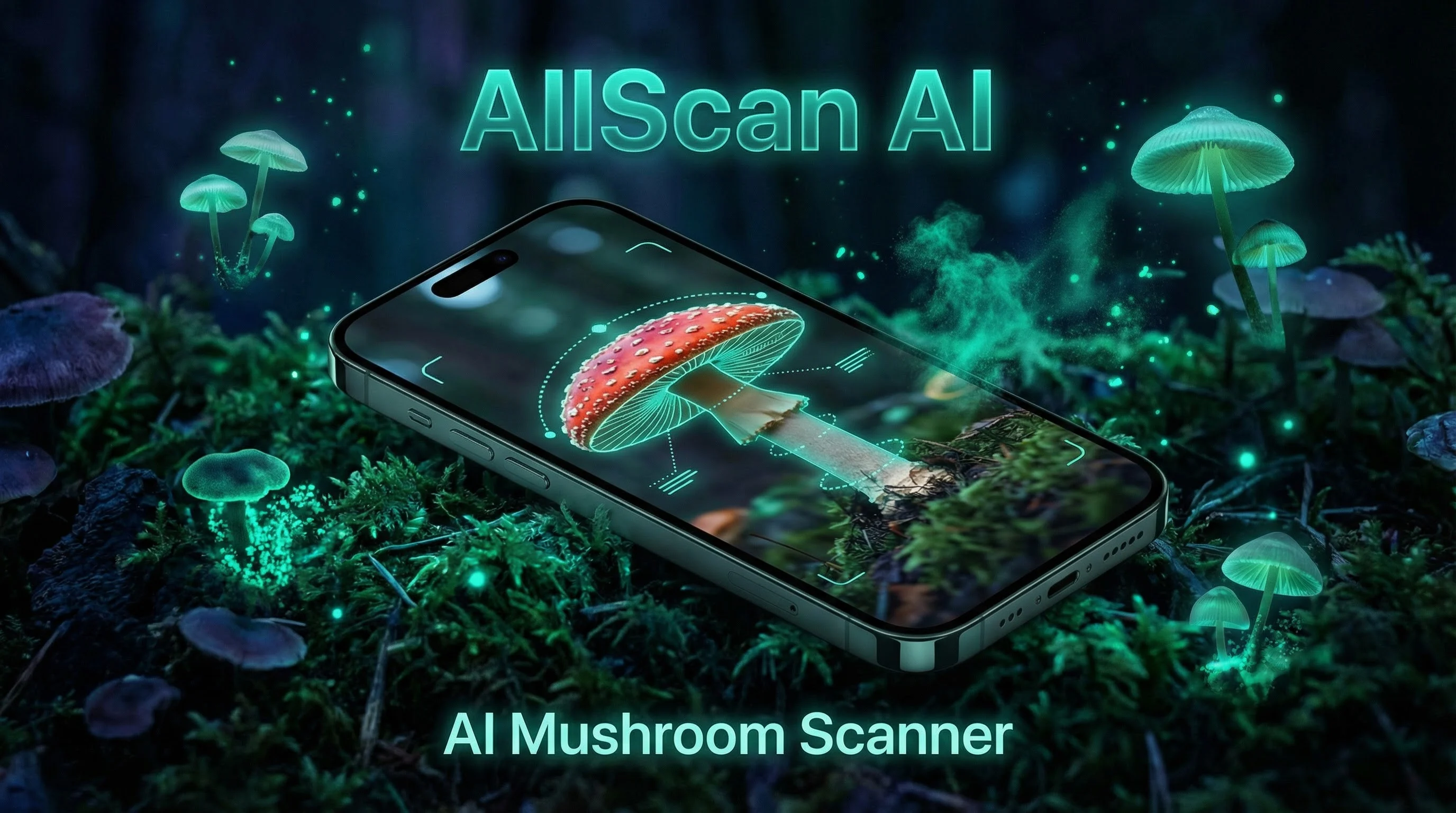
AI mushroom identification is the process of using image recognition to determine a mushroom's species from a photograph. The model analyzes visual features including cap shape, color, gill pattern, stem structure, and surface texture. It returns a species name, edibility status, typical habitat, and season of occurrence. This tool assists with identification but does not replace expert mycological assessment.
The AI mushroom scanner uses a deep learning model trained on labeled images of mushroom species from field guides and mycological databases. The model recognizes features such as cap convexity, gill attachment, spore print color implications from gill shade, and the presence of a ring or volva on the stem. It combines these signals to produce a species match ranked by confidence. Higher confidence scores indicate stronger visual alignment with known specimens.
The scanner detects cap mushrooms, bracket fungi, puffballs, coral fungi, and some jelly fungi. It covers both gilled and pored species. Common edible species like chanterelles, morels, and porcini are well-represented. Known toxic species including death cap, destroying angel, and false morels are flagged with safety warnings when identified.
Foragers use mushroom scanners for a preliminary check before consulting field guides. Hikers photograph unfamiliar fungi encountered on trails, sometimes alongside insect scanner results for bugs found on the same specimens. Gardeners scan mushrooms that appear in their lawns or garden beds. Biology students use the tool for coursework and field study documentation. Pet owners scan backyard mushrooms to assess whether they pose a risk to dogs.
Take a clear side-view photo that shows the cap, gills or pores, and the full stem. If possible, take a second photo of the underside to reveal gill structure. Include the base of the stem because features like a bulbous base or volva are important for identification. Natural lighting produces accurate colors.
Upload the photo to the mushroom scanner. The AI processes the image and compares it against its training data. Processing takes a few seconds. No manual species selection is needed before scanning.
The result displays the species name, confidence score, edibility category, and habitat description. Edibility categories typically include edible, inedible, toxic, or deadly. If the scanner returns a toxic species match, treat the mushroom as unsafe regardless of the confidence score. When in doubt, do not eat any wild mushroom based on an AI scan alone.
The scanner recognizes widely foraged edible species. Chanterelles are identified by their ridged, forking gills and golden color. Morels are recognized by their honeycomb cap structure. Porcini mushrooms show a thick white stem and brown convex cap. King oyster, shiitake, and maitake are included in the training data. Edibility labels apply to the identified species under typical conditions, not to every individual specimen. Once you've confirmed a species is safe, the AI food scanner can estimate its nutritional content when prepared as a meal.
The model flags known toxic species with explicit warnings. Amanita phalloides (death cap) is one of the deadliest mushrooms and is covered in the dataset. Amanita virosa (destroying angel), Galerina marginata, and Gyromitra esculenta are also flagged. The scanner provides a warning even for partial matches with these species. A warning label does not guarantee accuracy, and absence of a warning does not guarantee safety.
Many edible mushrooms have toxic lookalikes. Chanterelles resemble jack-o-lantern mushrooms. Morels resemble false morels. Edible Agaricus species resemble toxic Amanita in early growth stages. The scanner attempts to distinguish between lookalike pairs, but photo quality and specimen maturity affect the result. When the scanner suggests a confusion pair, it notes both possibilities and recommends expert verification.
Mushrooms growing on logs, stumps, and living trees have distinct features the scanner reads. Turkey tail shows concentric color bands on a thin, fan-shaped cap. Chicken of the woods displays bright orange and yellow shelving brackets. Reishi shows a varnished reddish-brown surface. These wood-dwelling species are identified by their growth form, attachment point, and surface texture rather than traditional cap-and-stem anatomy.
Mushroom species vary by region and season. Nature enthusiasts who forage for mushrooms often photograph wildlife in the same areas — the bird identification tool helps name species spotted along the trail. The scanner identifies species based on visual features alone and does not factor in your geographic location. A species common in Europe may look identical to a different species in North America. Seasonal context matters because the same location can produce different species in spring versus fall. Consider your region and season when evaluating scan results.
AI mushroom identification is not safe enough to use as the sole basis for eating wild mushrooms. The scanner analyzes visual features only. It cannot assess spore print color, chemical reactions, odor, or habitat substrate, all of which are important for accurate mycological identification. A misidentification of a toxic species can cause serious illness or death.
Never eat a wild mushroom based on an AI scan result alone. The scanner is a reference tool, not a safety device. Some deadly species are nearly identical to edible species in photographs. The plant identification tool handles broader botanical identification for non-fungal organisms. Always consult an experienced mycologist, local foraging group, or poison control center before consuming any wild fungus.
A forager spots a cluster of golden mushrooms on a mossy log. The side-view photo shows decurrent gills and a funnel-shaped cap. The scanner identifies them as chanterelles with high confidence. The forager then cross-references with a local field guide before collecting. That two-step check is the responsible approach.
A dog owner notices a white mushroom growing in the backyard after a rainstorm. Concerned about pet safety, they photograph it and scan. The result suggests Chlorophyllum molybdites, a toxic lawn species common after rain. The owner removes the mushrooms and monitors the dog for symptoms.
A hiking group encounters a large orange bracket fungus on a fallen oak. The scanner identifies it as Laetiporus sulphureus, commonly called chicken of the woods. The result notes it is generally considered edible when cooked but may cause reactions in some individuals. The group photographs the find and decides to research further before harvesting.
A biology student photographs dozens of mushroom species during a field study in autumn. Uploading each photo to the scanner provides a starting identification that the student then verifies against dichotomous keys. The scanner speeds up initial cataloging without replacing the formal identification process required for academic work.
AI mushroom identification works by analyzing a photo of a mushroom specimen. The model examines cap shape, gill structure, stem characteristics, color, and surface texture to match the specimen against a mycological reference database. It returns a species name, habitat information, and edibility notes.
The scanner provides edibility information based on the identified species. However, AI mushroom identification should never be the sole basis for deciding to eat a wild mushroom. Many toxic species closely resemble edible ones. Always confirm with an experienced mycologist before consuming any foraged mushroom.
AllScan AI offers free mushroom scans through the web tool and mobile app. The web version provides a limited number of daily scans. The app includes additional free daily scans on iOS and Android.
Accuracy depends on photo quality, specimen maturity, and species distinctiveness. Common species with unique features like morels, chanterelles, and fly agaric are identified with higher confidence. Lookalike species, immature specimens, and partially obscured mushrooms reduce accuracy.
Photograph the mushroom from the side to show the cap, gills, and stem together. A second photo of the underside showing gill or pore structure improves identification. Include the base of the stem, as some species have distinctive features like a volva or ring.
Yes. The scanner recognizes wood-growing species such as oyster mushrooms, turkey tail, reishi, chicken of the woods, and lion's mane. Bracket fungi and polypores on dead wood or living trees are included in the training data.
The scanner works less reliably with dried mushrooms. Drying changes color, shape, and texture, which are the primary features the AI uses. Fresh specimens in their natural state produce more accurate results.
Yes. Lawn and garden mushrooms are commonly scanned. The scanner helps identify species that appear in grass, mulch beds, and around tree bases. Common yard species include inky caps, fairy ring mushrooms, and various Agaricus species.
The AI model covers thousands of mushroom species from North America, Europe, Asia, and other regions. Coverage is strongest for commonly encountered species. Rare or region-specific species may not be in the training set.
No. AI mushroom identification is not reliable enough to determine safety for consumption. Many deadly species closely resemble edible ones. Always verify with an experienced human expert before eating any wild mushroom.
 AllScan