Upload a photo of any coin to identify its country, year, denomination, mint mark, and estimated value. The AI coin scanner analyzes design details and returns results in seconds.

Tap or drag a coin photo here to scan
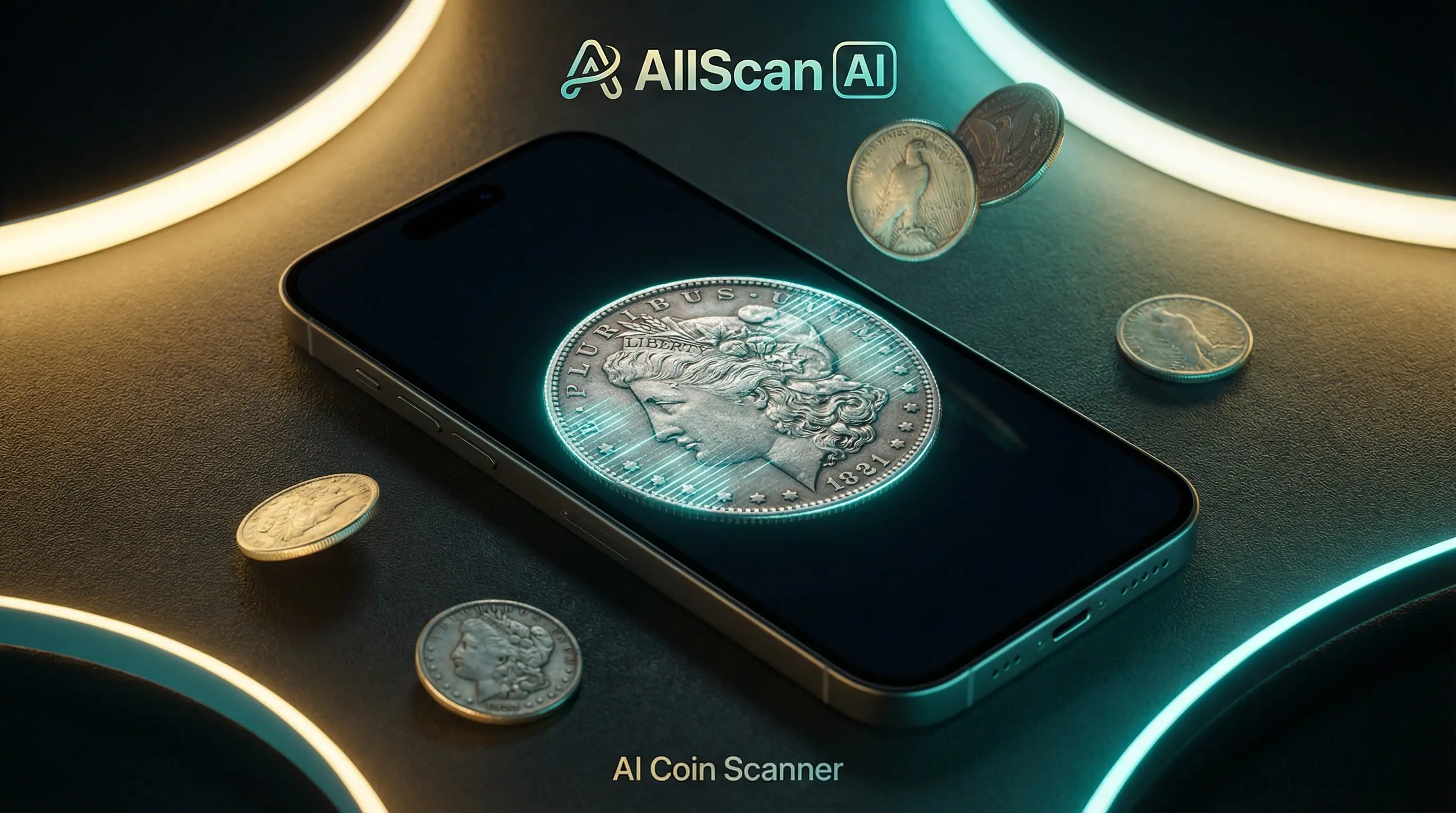
AI coin identification is the process of using image recognition to determine a coin's origin, denomination, date, and condition from a photograph. The model reads inscriptions, analyzes design motifs, and compares surface wear against grading references. It works with modern circulated coins, collectible coins, and many historical issues.
The AI coin scanner uses a neural network trained on images of coins from dozens of countries and centuries. When you upload a photo, the model isolates the coin from the background and reads the visible design. It detects the portrait, denomination text, date, and mint mark. These features are matched against a reference catalog to identify the coin type and series.
A typical scan result includes the country of origin, denomination, year of issue, and mint facility. For US coins, the result may include the series name, such as Morgan Dollar or Walking Liberty Half. The scanner also provides an estimated grade on a descriptive scale and a general market value range based on recent reference data. For paper currency, the banknote scanner provides denomination and series identification from a photo.
Coin collectors use the scanner to quickly catalog acquisitions. Estate executors photograph inherited coin collections for initial identification. Flea market shoppers scan coins before purchasing to check approximate value. History enthusiasts upload finds from metal detecting to identify origin and era. For other collectible items found at markets, the product search tool helps locate comparable listings online.
Place the coin on a flat, contrasting surface. A dark coin photographs well on a white background, and a light coin works on dark fabric. Take a straight-on shot without tilt. Photograph both the obverse (front) and reverse (back) for fuller identification. Avoid direct flash that causes glare.
Upload the coin photo to the scanner. The AI processes the image in seconds. It reads inscriptions, analyzes the portrait or design, and checks the date and mint mark. No manual data entry is needed.
The result displays the coin's identity, approximate grade, and estimated value range. If the scanner returns a low confidence score, try a sharper photo with better lighting. Scanning both sides of the coin often improves the match.
The scanner covers US coins from early copper cents through modern commemoratives. Lincoln pennies, Jefferson nickels, Roosevelt dimes, Washington quarters, and Kennedy half dollars are identified with high reliability. Key dates and mint mark varieties for popular series are included in the reference data. Rare issues like the 1909-S VDB cent or 1916-D Mercury dime are recognized when the photo is clear enough.
Coins from the United Kingdom, Canada, Australia, Mexico, Japan, India, and European Union countries are well-represented. The scanner handles both decimal and pre-decimal systems. Modern euro coins are identified by country of issue based on the national side design. Coverage is more limited for small island nations and short-lived currency systems.
The AI provides an approximate coin grade based on visible wear. It uses descriptive terms like Good, Fine, Extremely Fine, and Uncirculated. The estimate is based on the sharpness of design details, edge condition, and surface marks visible in the photo. Professional coin grading requires physical inspection under magnification, so the AI grade is a starting point only.
Estimated values reflect general market ranges for the identified coin in the estimated grade. Values for common circulated coins may be near face value. Collectible dates, low-mintage issues, and coins in high grades can show significantly higher ranges. The AI value estimate does not account for toning, eye appeal, or other subjective factors that affect dealer pricing.
The model includes training data for Roman denarii, Greek drachms, Byzantine solidi, and other ancient types. Medieval European coins and early American colonial issues are also covered to a degree. Collectors who also find mineral specimens on digs can use the rock and crystal scanner to identify geological finds. Ancient coin identification is inherently harder because designs vary between die pairs and surfaces degrade over centuries. Clear, high-resolution photos are essential for ancient coin scanning.
AI coin identification is not a professional appraisal. The scanner cannot weigh, measure, or test the metal composition of a coin. Heavily worn, cleaned, or damaged coins produce less reliable identifications. Value estimates are general ranges, not current dealer offers or auction prices.
The scanner does not authenticate coins. It cannot confirm whether a coin is genuine or counterfeit based on a photo alone. Collectors should use professional grading services for coins of significant value. The antique identification tool handles broader collectible identification if the item is not a coin.
You inherit a jar of old coins from a relative. Instead of sorting them manually, you photograph each coin and let the scanner identify denomination, year, and approximate value. Within an hour, you have a basic inventory that helps decide which coins warrant professional grading.
A metal detectorist finds a worn coin at a park. The date is barely legible. Uploading a close-up photo lets the AI read partial inscriptions and match the design to a specific series. The scan identifies it as a 1920s Buffalo nickel in Good condition.
A traveler returns home with leftover foreign coins and wants to know if any have collector value. Scanning each coin reveals most are common circulation issues worth face value. One coin turns out to be a commemorative euro with a higher collector premium.
Someone finds a collection of silver dollars at an estate sale. Scanning shows a mix of Morgan and Peace dollars across several dates. The AI flags two coins as key dates with higher estimated values, prompting the buyer to seek professional grading before resale.
AI coin identification works by analyzing a photo of a coin's obverse or reverse side. The model detects design elements, inscriptions, date, and mint mark to match the coin against a reference database. It returns the country of origin, denomination, year, and an estimated grade.
The scanner can identify many historical and ancient coins when the design elements are visible. Roman, Greek, and medieval coins are represented in the training data. Heavily worn or corroded coins with unreadable inscriptions may produce lower confidence results.
AllScan AI offers free coin scans through the web tool and mobile app. The web version provides a limited number of daily scans. The app includes additional free daily scans on iOS and Android.
AI coin grading provides an approximate grade based on visible wear patterns. It is not a substitute for professional grading by services like PCGS or NGC. The AI estimate is useful as a starting reference but should not be used for insurance or sales purposes.
The scanner provides a general value range based on the identified coin type, year, and estimated grade. Coin values fluctuate with market conditions, metal prices, and collector demand. The estimate is a reference point, not an appraisal.
Yes. The AI coin scanner identifies coins from countries worldwide including the United States, United Kingdom, Canada, Australia, European Union nations, and many others. Coverage is broader for widely circulated modern coins.
A flat, straight-on photo of one side of the coin works best. Place the coin on a plain, contrasting background. Avoid shadows and glare from direct light. Photographing both sides separately improves identification accuracy.
The AI may flag visual inconsistencies that suggest a coin is not genuine. However, it is not a counterfeit detection tool. Physical testing and professional authentication are required to confirm fakes.
The scanner detects mint marks when they are visible in the photo. Common US mint marks like P, D, S, and W are recognized. Mint mark identification depends on photo resolution and the size of the mark relative to the overall coin image.
The scanner may identify well-known error types such as doubled dies, off-center strikes, and wrong planchet errors. Subtle errors or minor die varieties are less likely to be detected. Collectors seeking error coin verification should consult a numismatic expert.
 AllScan