Upload a photo of any cat to identify the breed, personality traits, and care recommendations. The AI cat identifier works with purebreds, domestic mixes, and kittens.

Tap or drag a cat photo here to scan
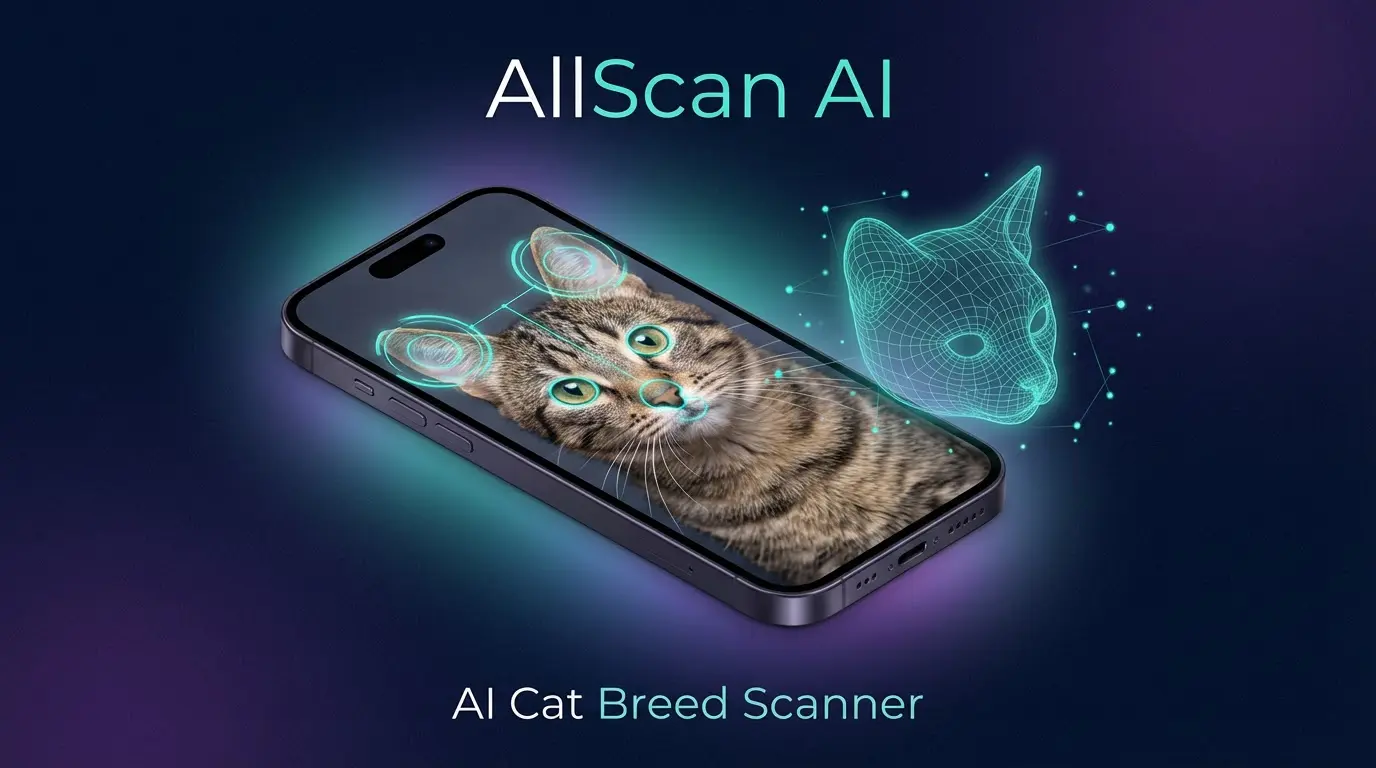
AI cat breed identification uses machine learning to match a cat's physical features to known breed profiles. The user uploads a photo, and the model analyzes facial structure, ear shape, coat length, color pattern, and body type. It returns a breed name, confidence score, and breed-specific information.
The cat identifier uses a neural network trained on labeled images across recognized cat breeds. It evaluates face shape, ear position, eye spacing, fur texture, and tail length. These visual signals are weighted against breed standards. The model handles variation in angle, grooming state, and background clutter to produce a reliable match.
Most pet cats are domestic shorthairs or domestic longhairs rather than a specific breed. The scanner distinguishes between purebred cats with recognizable features and general domestic cats. A Siamese is identifiable by its color points and face shape. A tabby domestic shorthair may not match any breed closely and is labeled accordingly.
Cat owners who adopted from shelters or found a stray often lack breed documentation. Knowing the breed helps predict adult size, grooming needs, and potential health issues. Some breeds have specific dietary or environmental requirements. A breed scan provides a starting point for personalized care.
Photograph the cat from a front-facing or side angle in natural light. Include the face and as much of the body as possible. Avoid photos where the cat is hiding under furniture or partially obscured by blankets.
Upload the photo to the cat breed scanner. The AI isolates the cat from the background and analyzes physical features. Processing completes in a few seconds with no additional input required from the user.
The scanner displays the identified breed or domestic category with a confidence score. Results include coat pattern, typical personality traits, and general care notes. If confidence is low, uploading a different angle or better-lit photo may improve the result.
The scanner identifies common coat patterns including tabby (mackerel, classic, spotted, ticked), calico, tortoiseshell, tuxedo, bicolor, and solid. Coat pattern is separate from breed. A tabby pattern appears in many breeds and domestic cats. The scanner reports both the pattern type and the breed match when applicable. AllScan AI uses the same pattern-recognition approach for other living things, including the AI fish scanner that identifies species by fin shape and scale coloring.
Breeds with distinct visual markers are identified with high confidence. Persian cats are recognized by their flat face and long fur. Maine Coons are identified by their large size, tufted ears, and bushy tail. Siamese cats are matched by color points and wedge-shaped face. Bengal cats are distinguished by their spotted or marbled coat. These breeds represent the most commonly scanned cats.
After a breed match, the scanner displays common temperament traits. Ragdolls are described as calm and docile. Abyssinians are noted for high activity and curiosity. British Shorthairs are characterized as independent and low-energy. These descriptions represent breed tendencies. Individual cats may behave differently based on upbringing, age, and socialization history. Cat owners who watch birds from the window with their pet can use AI bird identification to name the species visiting their yard.
Scanning kittens is supported but produces less precise results. Kittens undergo significant physical changes in their first year. Eye color often shifts. Coat patterns can develop or darken over time. A kitten scanned at four weeks may receive a different breed suggestion than the same cat scanned at eight months. Rescanning as the cat matures provides better accuracy. The broader AI animal identification tool can also classify wild felines like bobcats or lynx that the breed scanner does not cover.
Some breed results include notes on common health considerations. Persians are associated with breathing difficulties due to their flat facial structure. Maine Coons have a higher incidence of hypertrophic cardiomyopathy. Scottish Folds may develop joint issues linked to the gene responsible for their folded ears. These notes are general breed information, not a diagnosis. Always consult a veterinarian for health concerns.
AI cat breed identification is a visual estimate. It does not replace genetic testing for breed verification. Cats with clipped or shaved fur may not match accurately. Dark or blurry photos reduce the model's ability to detect distinguishing features. Black cats in low light are particularly challenging for the scanner.
The scanner does not diagnose health conditions, allergies, or behavioral issues. Breed descriptions are generalizations. Not every Persian cat has breathing problems, and not every Siamese is vocal. For health or behavior concerns, consult a veterinarian or feline behaviorist. Do not rely on AI breed identification for breeding decisions or pedigree documentation.
You adopt a gray cat from a rescue and wonder about the breed. The scanner identifies Russian Blue characteristics based on the dense double coat, green eyes, and wedge-shaped face. That identification helps you research the breed's tendency toward shyness with strangers.
A friend shows you a photo of their new kitten with unusually large ears and a slender body. You scan it and the AI returns "Oriental Shorthair" with a high confidence match. The breed profile notes that Orientals are highly social and vocal, which matches the kitten's behavior.
Your neighbor's cat had kittens, and each looks different. You scan three kittens and get "domestic shorthair" for all three, with different coat pattern classifications: tabby, tuxedo, and solid black. This confirms that the litter is from a mixed-breed mother, which is common.
A shelter volunteer uses the AI dog breed scanner for canine intakes and this cat scanner for feline arrivals. Listing a cat as "possible Ragdoll mix" rather than just "domestic longhair" in adoption profiles draws more interest from potential adopters who recognize the breed name.
AI cat breed identification works by analyzing a photo against a model trained on recognized breeds. The AI examines facial structure, ear shape, coat pattern, eye color, and body proportions to return a breed match with a confidence score.
Upload a clear photo of your cat to the AI breed scanner. The tool analyzes visible features and returns the most likely breed or breed mix. Photos showing the face and full body in natural light produce the most accurate results.
The scanner distinguishes between purebred cats with distinctive features and domestic shorthairs or longhairs. Many cats are domestic mixes without a specific breed, and the scanner labels them accordingly rather than assigning an incorrect breed.
AllScan AI offers free cat breed scans through the web tool and mobile app. The web version provides a limited number of daily scans. The app includes additional free scans each day on iOS and Android.
Accuracy is highest for breeds with distinct physical traits, such as Siamese, Persian, Maine Coon, and Sphynx. Cats with mixed ancestry or common domestic features may receive a broader classification rather than a specific breed name.
Kittens can be scanned, but results are less reliable. Coat patterns, eye color, and facial proportions change as kittens mature. Scanning again at six months or older improves accuracy.
Yes. Results include common personality traits such as activity level, sociability, and vocalization tendency. These traits describe the breed in general. Individual cats vary based on socialization and environment.
Most cats without registration papers are domestic shorthairs or longhairs. The AI scanner returns the closest breed match or labels the cat as a domestic mix if no specific breed is visually dominant.
The scanner recognizes coat patterns including tabby, calico, tortoiseshell, tuxedo, and solid colors. Coat pattern is a color classification, not a breed. The scanner reports both the pattern and the likely breed or domestic category.
 AllScan